
 Page Builder
  Widgets Bundle
  SiteOrigin CSS
  Installer
 Page Template Settings
2 min read Updated
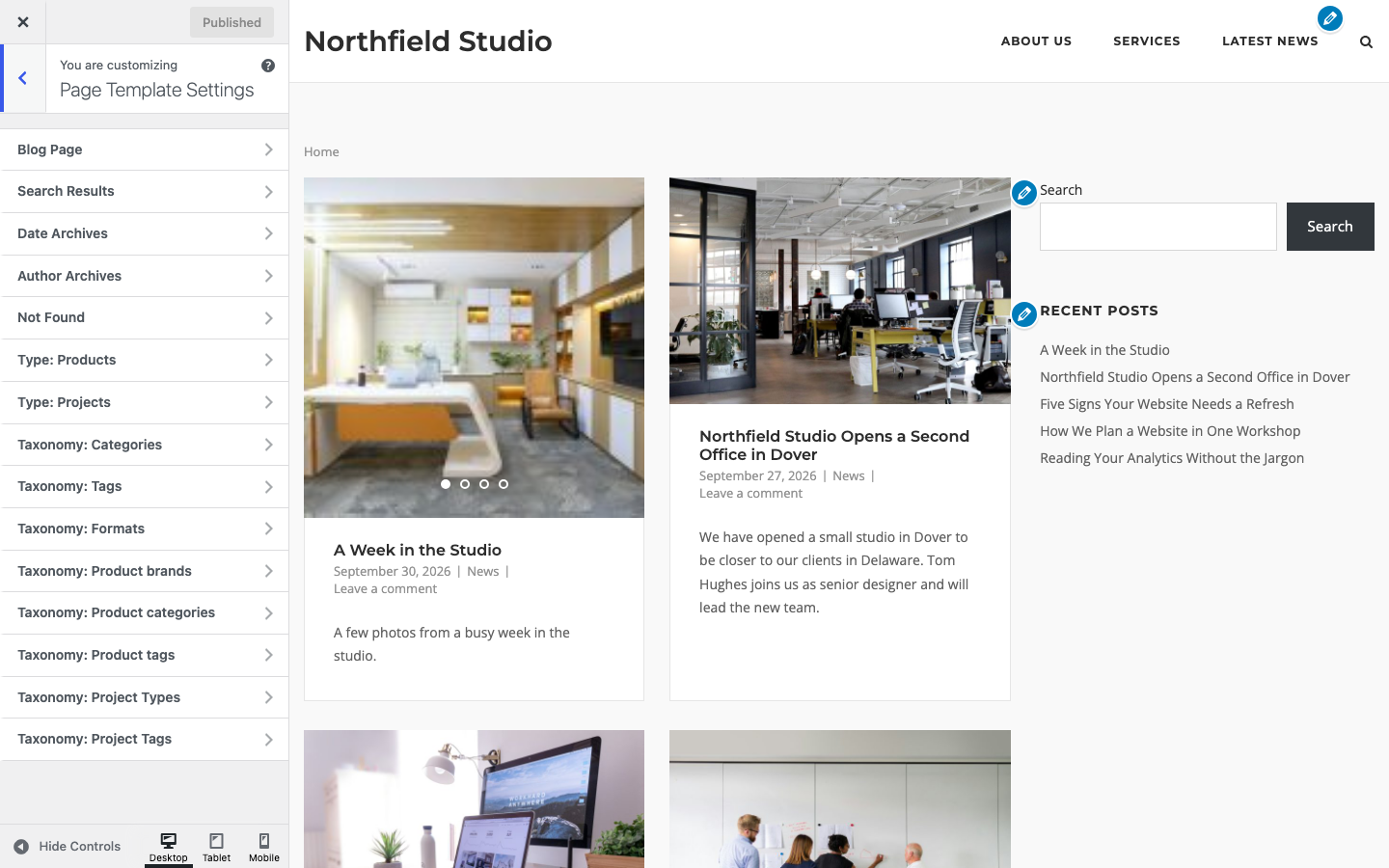
Page Template Settings change the layout of pages that you do not edit one by one: the blog page, search results, archives and the 404 page. Go to AppearanceCustomizePage Template Settings.
To change one page, post or project, use the Page Settings box instead.
Sections
The panel has a section for each of these templates, post types and taxonomies:
- Blog Page: The page set as your Posts page, or the blog home page.
- Search Results
- Date Archives
- Author Archives
- Not Found: The 404 page.
- Type: {name}: One section for each public post type that has an archive and a label, for example Type: Products with WooCommerce or Type: Projects with Jetpack Portfolio.
- Taxonomy: {name}: One section for each public, publicly queryable taxonomy that has a label, for example Taxonomy: Categories, Taxonomy: Tags or Taxonomy: Product categories.
Each section has the same eight settings. They work as they do in Page Settings, so this page does not repeat them. See Page Settings for what each one does:
- Page Layout
- Header Overlap
- Header
- Header Bottom Margin
- Page Title
- Footer
- Footer Top Margin
- Footer Widgets
Where Each Section Applies
Use a section to change every page of that type at once. For example, set Type: Products to No Sidebar to remove the sidebar from the WooCommerce Shop page and its product listings. Set Search Results to Full Width, No Sidebar to widen the search page.
A page that shows a Post Loop Widget is still a page. It uses its own Page settings box, not a Page Template Settings section.
Notes
- The Page Template Settings panel shows only when the active theme supports it. Corp does.
- Corp shows every section in the Customizer at all times. You do not need to visit a page in the preview to make its section appear.
- To set a default for every page, use the
siteorigin_page_settings_defaultsfilter. See Advanced Customizations.